Closed Cell Spray Foam Insulation in Redmond, WA
The High-Density Product for Assemblies That Meet Moisture
Closed-cell spray foam is the denser of the two products, roughly two pounds per cubic foot, and it behaves less like insulation and more like a rigid layer bonded permanently to whatever it is sprayed against. That density buys three things at once. It delivers substantially more R-value per inch than open-cell, which matters any time the cavity depth is fixed and you cannot simply add thickness. It is its own vapor retarder at sufficient depth, so an assembly that would otherwise need a poly sheet and the detailing headaches that come with it can skip that step. And it adds real structural stiffness to the framing it adheres to. In a Climate Zone 4C house, that combination sends it to a specific list of assemblies: crawl space floors and perimeter walls, rim joists and bands, basement walls, the underside of metal roof decks on shop and flex buildings, and anywhere foam is going to sit against the ground, the weather, or a surface that will be cold enough to see condensation. It is the more expensive product per board foot and it is not the right answer everywhere. In an attic plane with plenty of room above the joists, paying for closed-cell density is paying for a property the assembly does not need. We put it where its properties earn their cost and use open-cell where they do not.
Depth is where closed-cell jobs go wrong. Sprayed too thin, it stops being a vapor retarder and the assembly behaves in a way nobody specified. Sprayed too thick in a single pass, it can shrink or fail to cure properly, and neither failure is visible once the job looks finished. We apply in controlled lifts, check depth as we go, and hand over the finished depth and coverage in writing, so the assembly you paid for is the assembly you can actually prove you have.

What's Included in our Closed Cell Spray Foam Insulation service?
Highest R-Value Per Inch
Where depth is limited, density is how you hit the target.
Built-In Vapor Retarder
No separate poly layer needed in the assemblies that need one.
Structural Rigidity
Adds real racking strength to the framing it permanently bonds to.
Proudly serving Redmond, Woodinville, Bothell, Kenmore, Duvall and Carnation for years.
Comprehensive Spray Foam Insulation Services in Redmond
Tailored to Your Needs
Spray foam comes as two products and a lot of assemblies. Closed-cell is dense, structural and its own vapor retarder, so it belongs in crawl spaces, on rim joists and against anything facing the ground. Open-cell is lighter and cheaper per inch, so it belongs in attic planes and interior walls. Choosing wrong is expensive to undo.
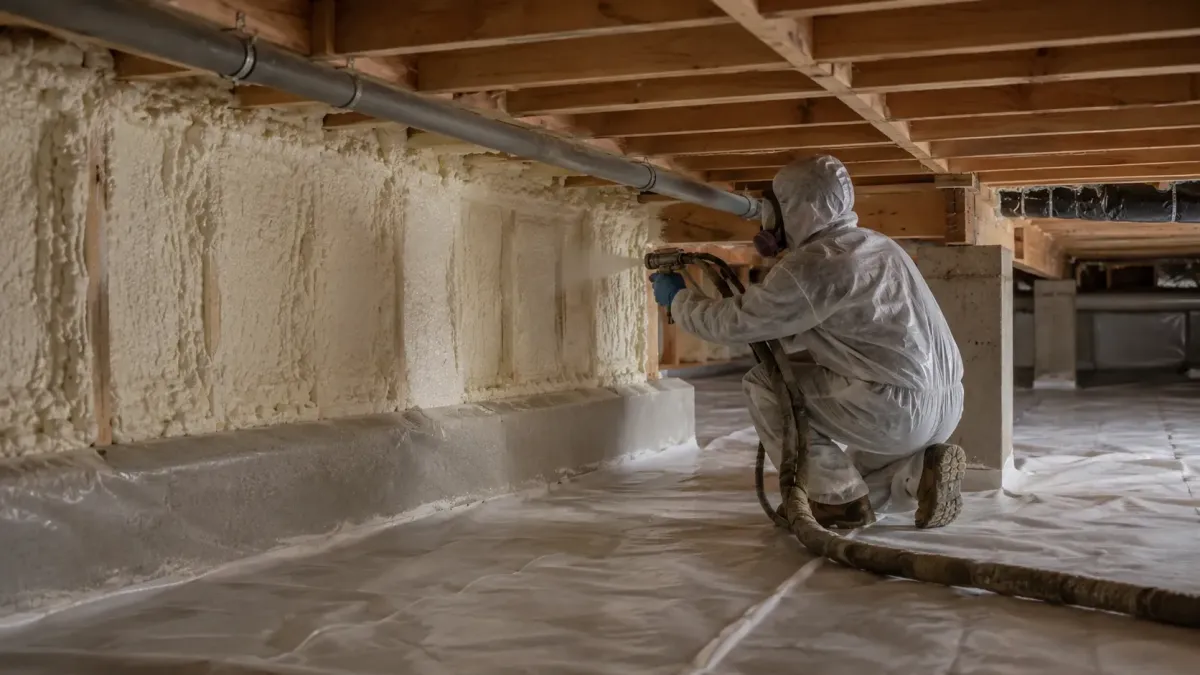
Closed-cell foam applied to the floor assembly and rim joist, sized for damp marine conditions.
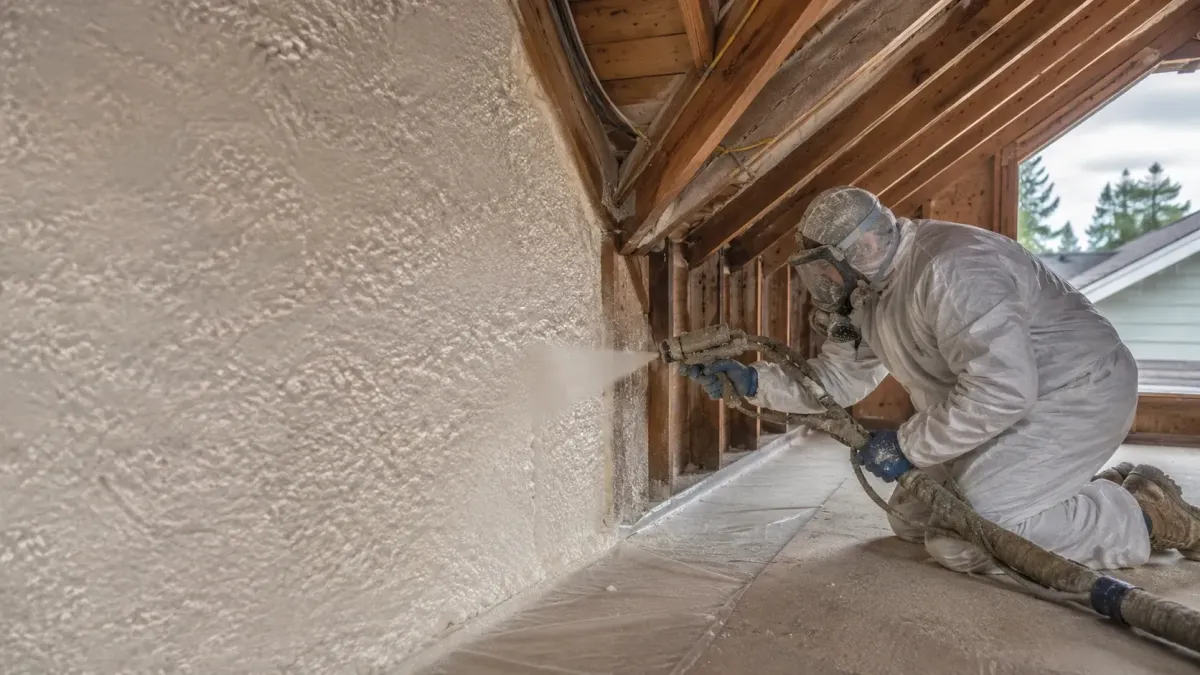
Dense two-pound foam for crawl spaces, rim joists, basement walls and metal decks.
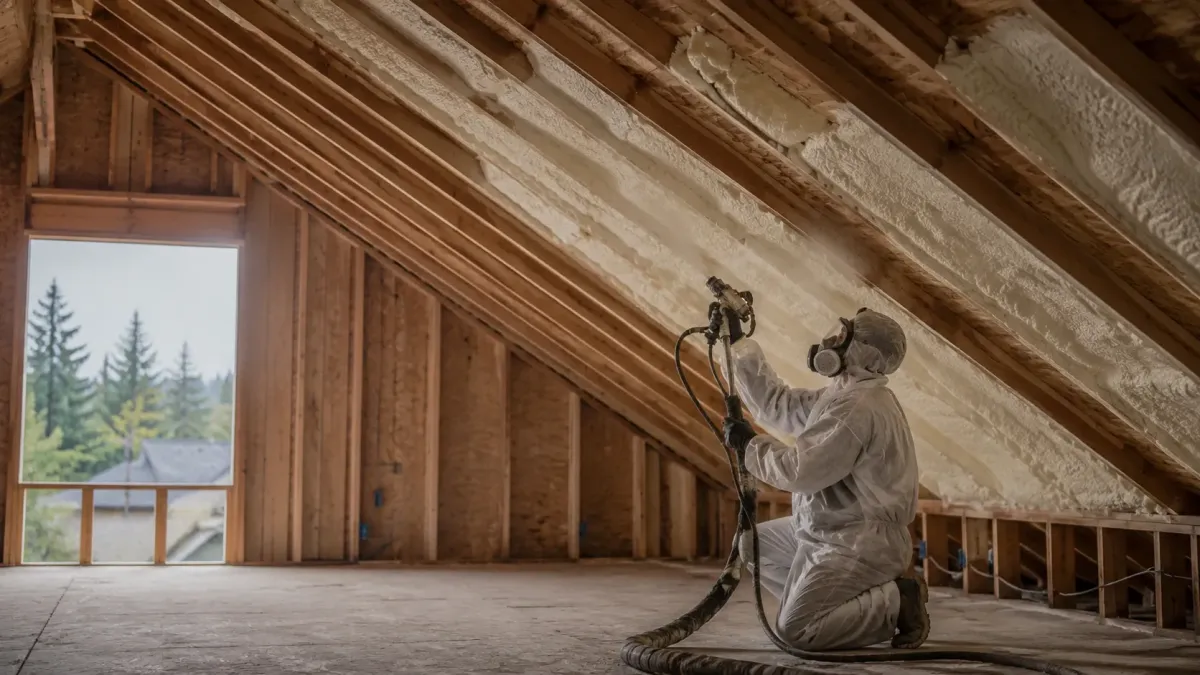
Open-cell foam at the attic plane or roof deck, sealed before depth.
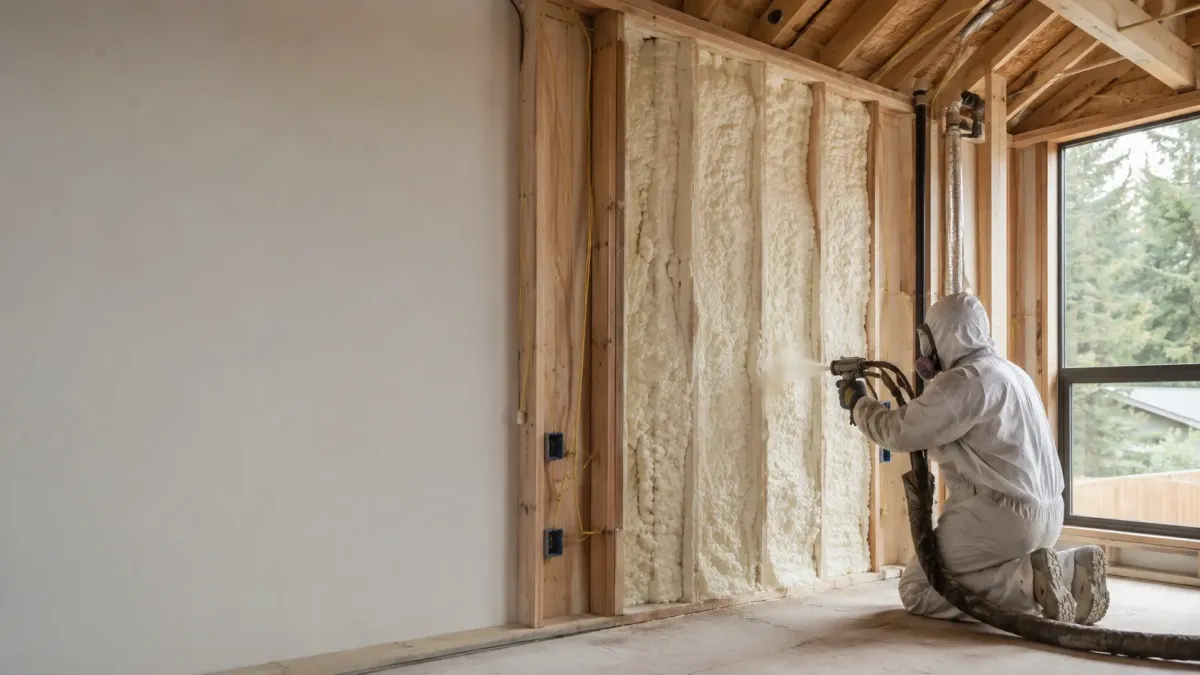
Light half-pound foam that expands to fill cavities completely and quiets the house.
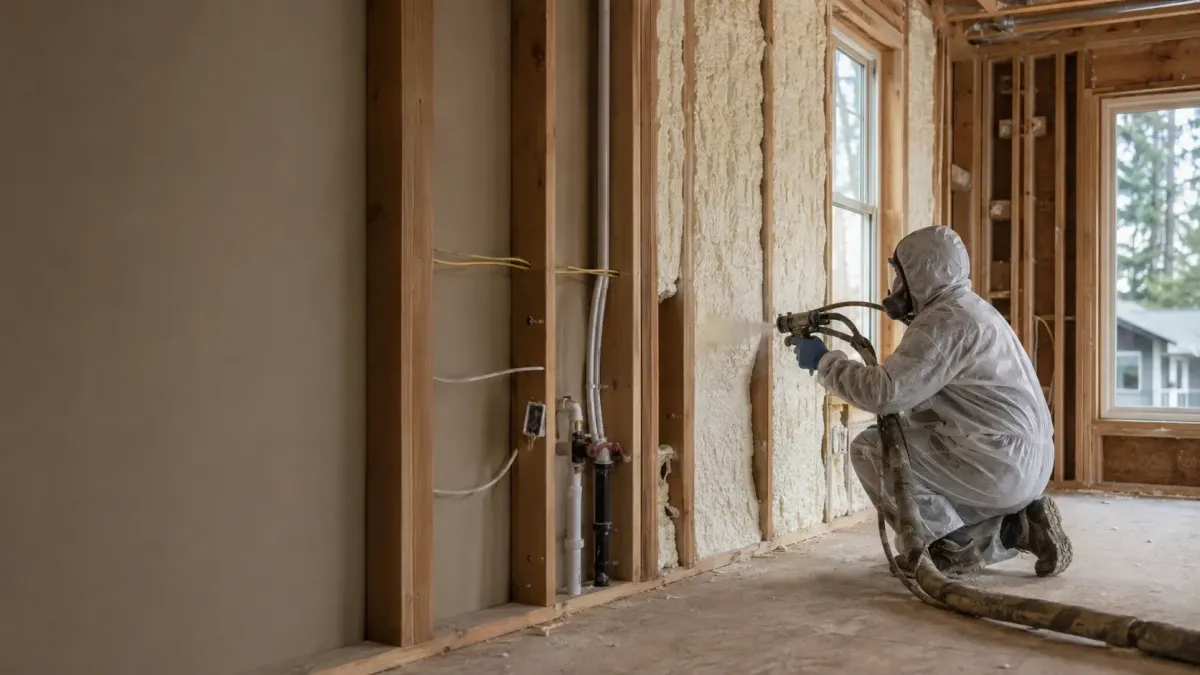
Foam into open stud bays during remodels, additions and re-siding work.
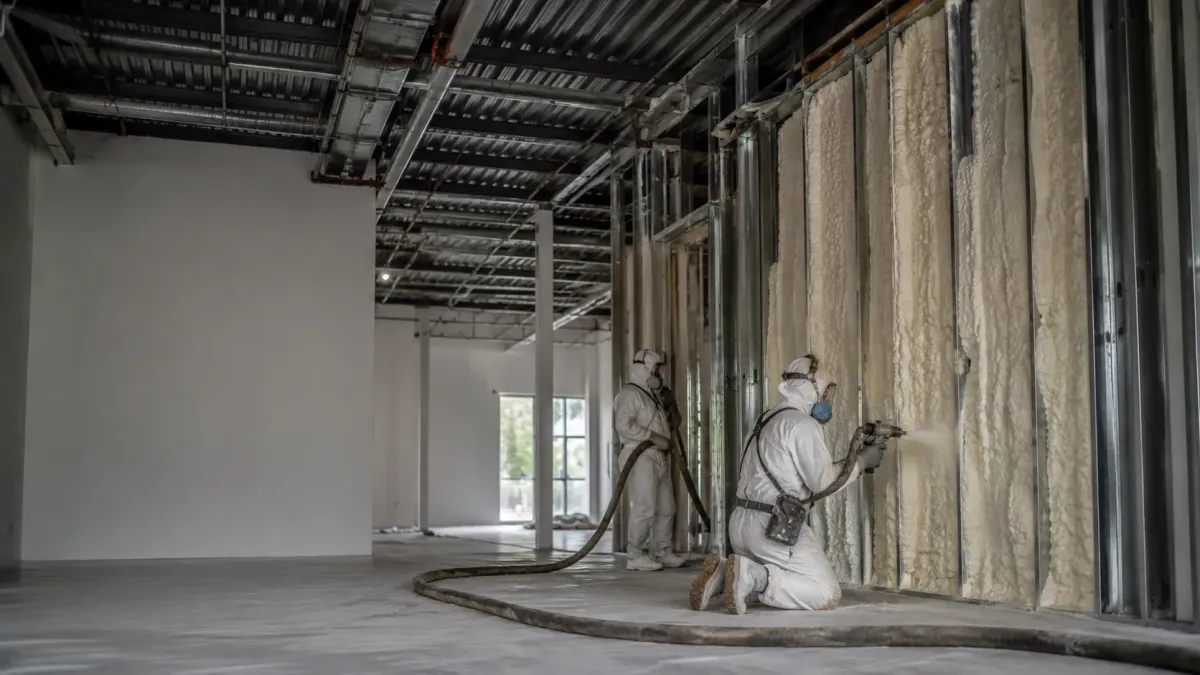
Closed-cell on metal decks and shell walls for Redmond flex, shop and office space.
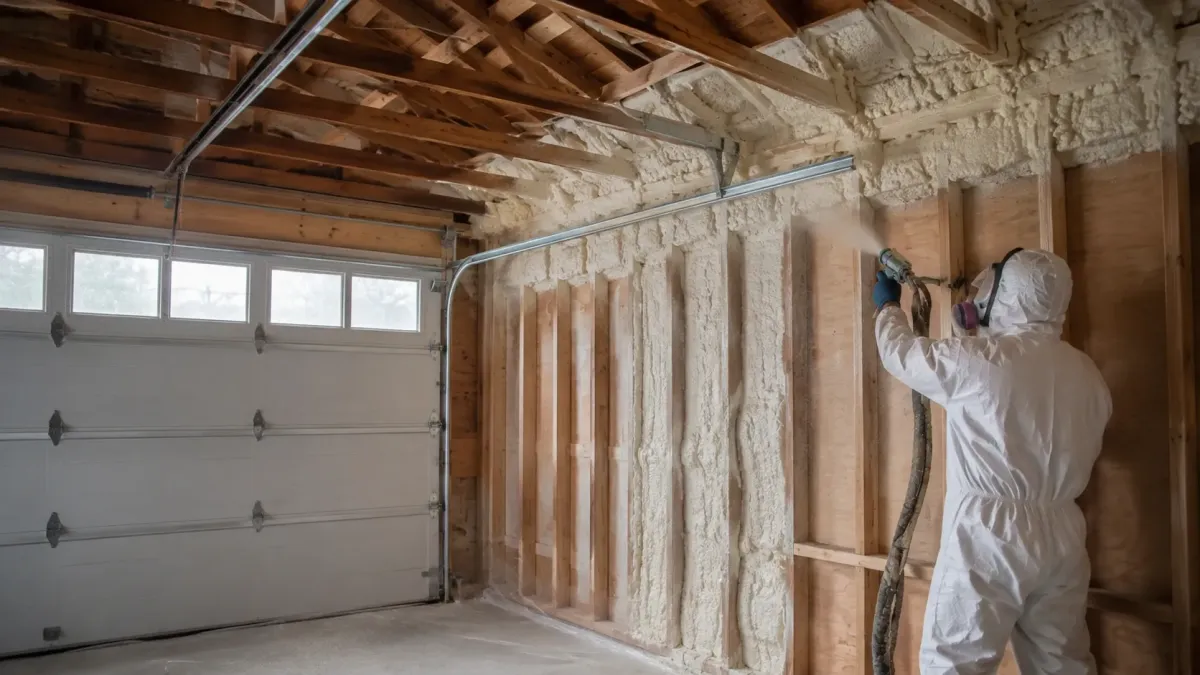
Foam for garage walls and ceilings, workshops, gyms and conversions.
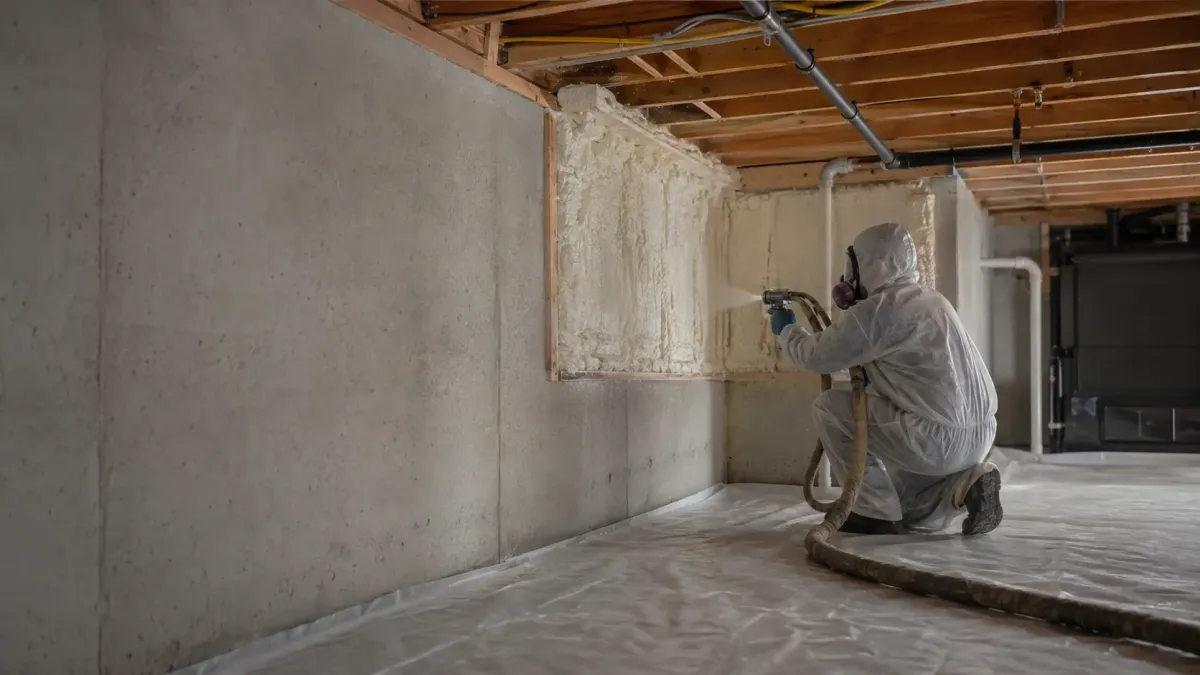
Closed-cell against foundation walls and rims, once the water problem is solved.
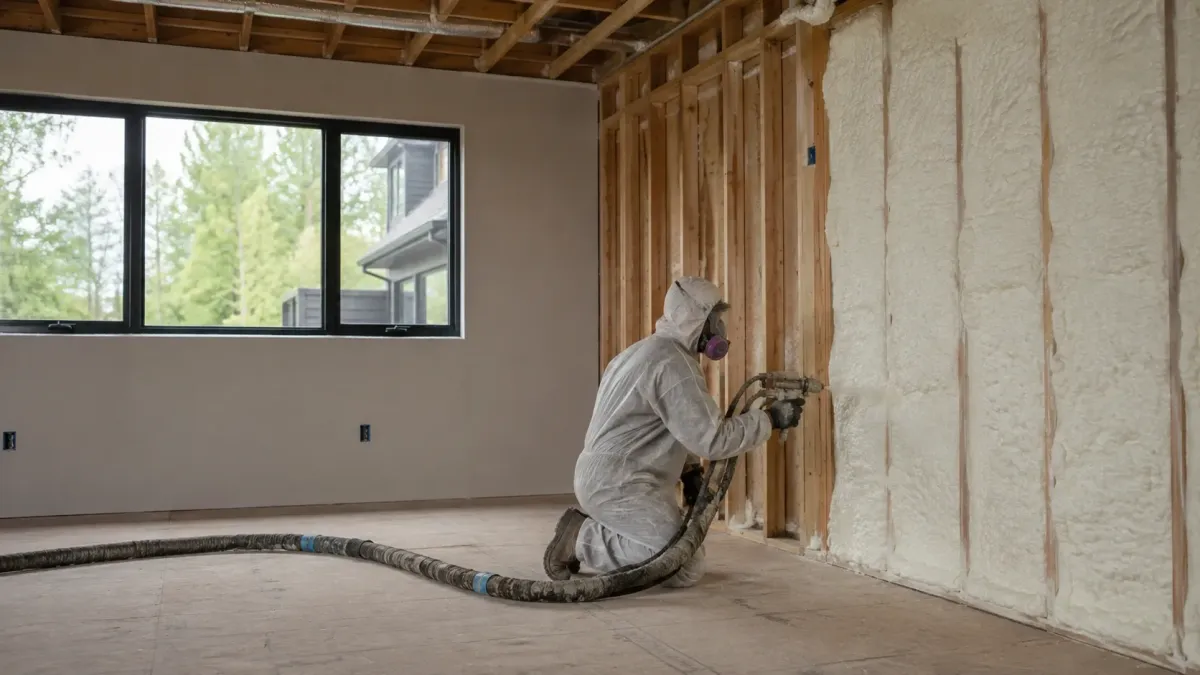
A licensed Redmond spray foam contractor who documents what was actually installed.
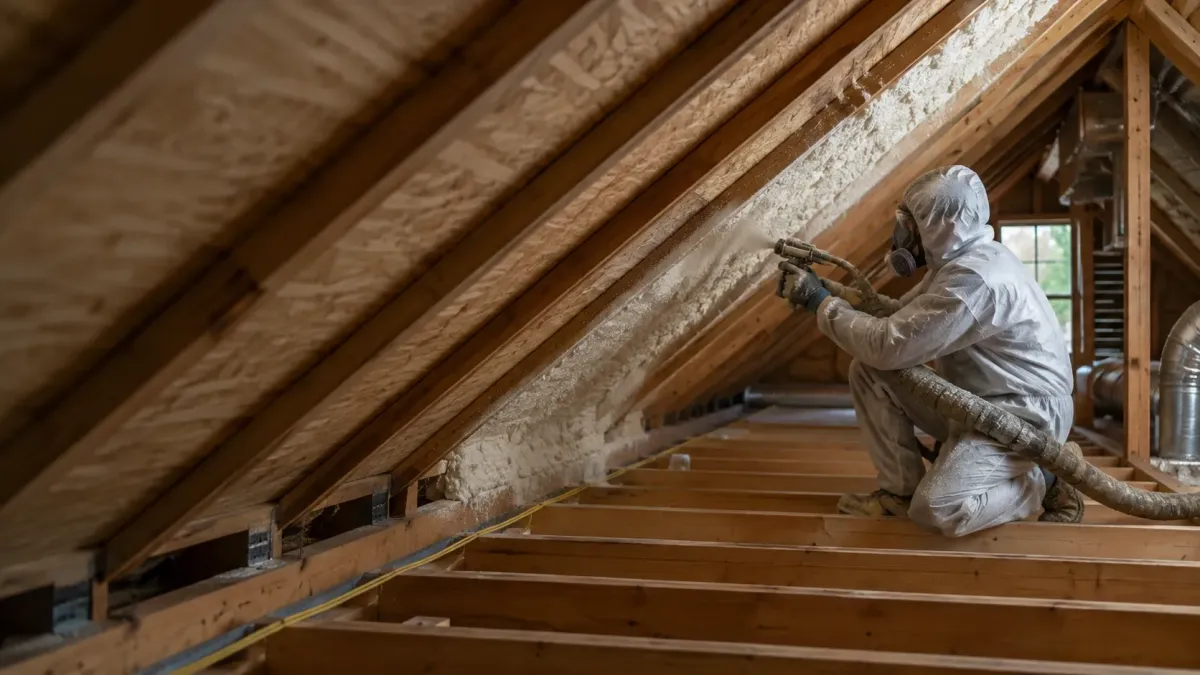
An assessment that tells you what your attic needs before anyone quotes a product.
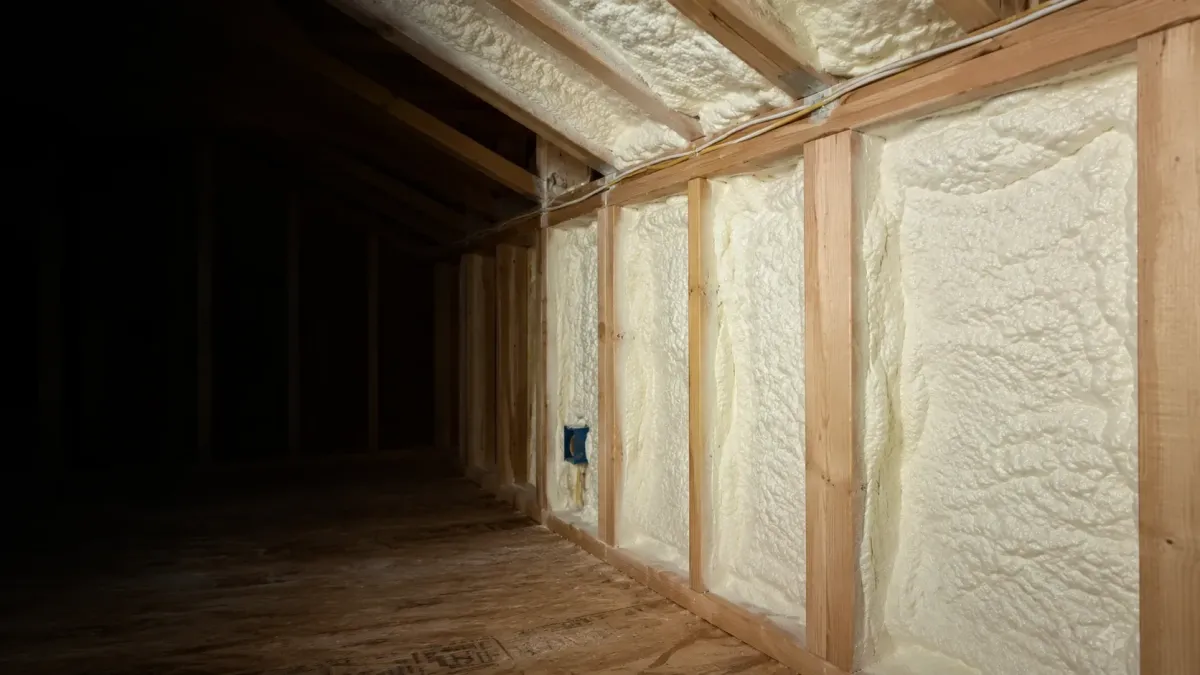
Spray Foam Insulation Across East King County
Spray foam specified for Climate Zone 4C, installed across Redmond and the east side of King County.
The east side of King County is one climate zone but several permit jurisdictions, and that changes how a job runs. Woodinville, Bothell, Kenmore and Duvall each run their own building department. Carnation permits inside the city, while rural parcels route to King County DPER. Most of the area is on Puget Sound Energy.
Frequently Asked Questions
Spray Foam Insulation can be complex, and we’re here to provide answers to common questions. Here are some frequently asked questions from our clients.
Frequently Asked Questions about spray foam insulation Redmond WA
How much does spray foam insulation cost in Redmond, WA?
There is no single Redmond number, and anyone who quotes one over the phone is guessing. Cost follows the square footage of the assembly, the depth the assembly needs, whether it is closed-cell or open-cell, and how hard the space is to get a hose into — a four-foot crawl space with a tight hatch costs more to do than an open attic of the same area. Removing failed insulation first adds to it. We measure the assembly, specify the depth, and price from that.
Do you need a permit for spray foam insulation in Redmond, WA?
It depends on the scope. Insulation upgrades inside an existing home often go ahead without a building permit, while work that touches the building envelope as part of a larger project, or anything in a commercial building, usually needs one through the City of Redmond Development Services Center. Applications run through the Redmond ePermitting Service. If your address sits in the surrounding unincorporated areas rather than inside the city, the permit desk is a different one, so we confirm jurisdiction before we quote rather than after.
What R-value does spray foam insulation need in Redmond, WA?
Redmond sits in Climate Zone 4C under the Washington State Energy Code, which is the marine designation covering the Puget Sound region. The code sets ceiling and attic targets high — R-60 prescriptively, with an R-49 path when full-depth coverage carries over the wall top plate at the eaves — and sets separate figures for walls, floors over crawl spaces and basement walls. Existing homes are grandfathered to the code they were built under, so the practical question is not what you are required to hit but what depth actually pays for itself in your assembly. Closed-cell delivers more R-value per inch than open-cell, which matters when depth is limited.
Is spray foam insulation worth it in Western Washington?
It is worth it where air movement is the problem rather than raw temperature, which describes most of what goes wrong in a marine climate. Damp air moving through a vented crawl space and condensing on cold framing does not care how many inches of batt are stapled up there. Foam stops the air and insulates in the same pass. In an attic with adequate depth and no air leakage, blown-in is often the better value — so we will tell you when foam is not the answer.
What is the difference between closed cell and open cell spray foam?
Closed-cell is dense, rigid, adds structural stiffness, delivers more R-value per inch and acts as its own vapor retarder. Open-cell is light, flexible, cheaper per inch, expands much further and lets vapor through. In Climate Zone 4C that mostly sorts itself: closed-cell for crawl spaces, rim joists, basement walls and anything against the ground or the weather, open-cell for attic planes and interior walls where depth and sound control matter more than moisture resistance.
Are there rebates for spray foam insulation in Redmond?
Puget Sound Energy runs weatherization rebates covering attic, floor and wall insulation, and most of Redmond is a PSE customer. The qualifying conditions are specific: the work has to be done by a PSE Trade Ally contractor, the home has to be a single-family property of four units or fewer heated primarily by PSE electricity or gas, site-built homes generally need to have been permitted before 1990, and existing insulation in the area being upgraded has to be thin. Energy Smart Eastside, which Redmond participates in, is a separate program covering heat pump conversions rather than insulation. We tell you which of these your job qualifies for before the work starts, not after.
Frequently Asked Questions about Closed Cell Spray Foam Insulation
How thick does closed cell spray foam need to be?
It depends what job the layer is doing. If it is acting as the vapor retarder for the assembly, there is a minimum depth below which it stops performing that function, and that governs. If it is purely thermal, the depth follows the R-value target for the assembly. We specify a depth per assembly and check it during application rather than eyeballing the finish.
Is closed cell spray foam worth the extra cost over open cell?
In crawl spaces, rim joists, basement walls and metal decks, yes — those assemblies need the moisture resistance and the R-value per inch, and open-cell in those locations creates problems rather than solving them. In an open attic with room to add depth, usually not. That is the honest split, and it is why we quote per assembly rather than per house.
Does closed cell spray foam need a vapor barrier?
At adequate depth it is the vapor retarder, so a separate poly layer is generally not added over it and adding one can create a double-barrier condition you do not want. Below that depth it is not, and the assembly needs rethinking. This is one of the main reasons depth gets checked rather than assumed.
Can closed cell spray foam be used on the ground in a crawl space?
No. Foam goes on the framing and the assembly surfaces, not on bare soil. Ground moisture is handled separately with a proper ground vapor barrier and, where needed, drainage. Anyone proposing to spray the dirt is not solving the problem you have.
Specify Your Closed Cell Assembly
What Our Satisfied Clients Have to Say About
We pride ourselves on delivering great results and experiences for each client. Hear directly from home and business owners who’ve trusted us with their Spray Foam Insulation needs.

Our Education Hill place had cold floors every winter and two companies told us to add more batts under the floor. These guys got in the crawl space, showed us the batts were sagging off the joists and soaking up damp, and specified closed-cell to the underside of the floor and the rim joist instead. Floors are warm now and the crawl space finally smells like nothing. They also filled out the PSE rebate paperwork for us, which I was not expecting.
Priya N.
We bought a 1970s house near Grass Lawn Park with an attic that had maybe four inches of old blown-in left. They open-celled the attic plane, documented the depth and the R-value they hit, and sealed the can lights and the attic hatch while they were up there. The upstairs bedrooms used to be ten degrees off the rest of the house. They are not anymore.
Marcus D.
We run a small shop in a Southeast Redmond flex building and the back bay was unusable in the cold. They spec'd closed-cell on the metal roof deck and the exterior walls, worked around our hours, and got the permit sorted through Development Services without us having to chase it. It is a completely different space now.
Hana S.
The Trusted Spray Foam Insulation Expert Near You
Ready to hear more about expert services at ?
Contact us today to receive a detailed, no-obligation quote.


Quick Links